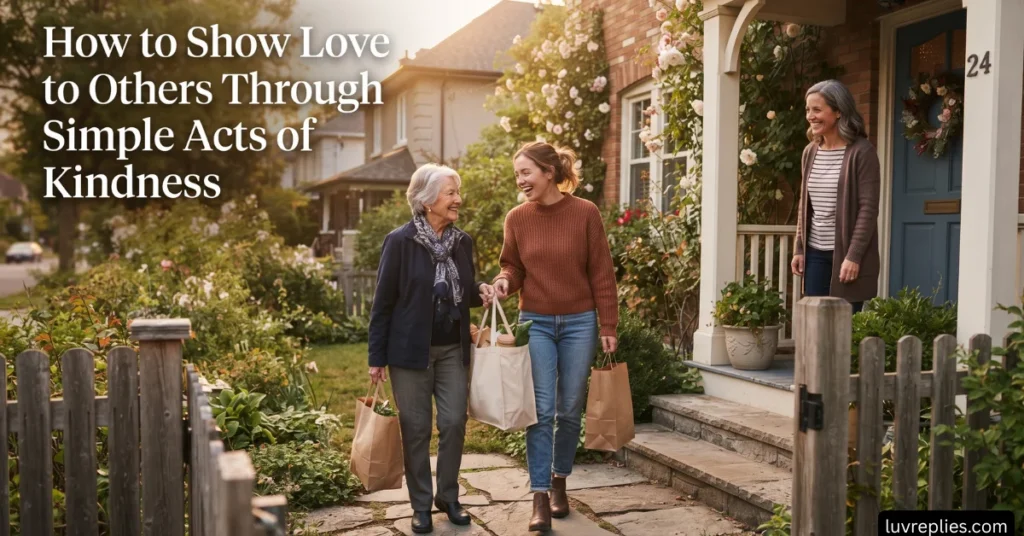
Love does not always need grand gestures, expensive gifts, or perfectly planned surprises. Sometimes, the most meaningful way to show someone you care is through a small act that tells them, “I see you, I appreciate you, and you matter to me.” Learning how to show love to others through simple acts of kindness can make relationships warmer, friendships stronger, and everyday life more meaningful.
Kindness has a special way of bringing people closer because it focuses on genuine care rather than material things. A thoughtful message, a patient conversation, a helping hand, or even remembering a small detail about someone can leave a lasting impression.
The beautiful thing about kindness is that almost anyone can practice it. You do not need a lot of money, free time, or special skills. What matters most is your intention and your willingness to notice what another person may need.
Let Your Actions Say What Words Sometimes Cannot
Words such as “I love you,” “I appreciate you,” and “I care about you” are important, but actions often make those words feel real. When someone consistently experiences your kindness, they can feel your affection in a deeper way.
Think about a person who has had a difficult day. Telling them that everything will be okay is comforting, but sitting beside them, listening without interrupting, or making them a cup of tea can communicate even more.
Small actions can become powerful expressions of love because they demonstrate attention. You are not simply saying that someone matters. You are showing it through what you do.
This is one of the simplest answers to how to show love to others through simple acts of kindness: pay attention to people’s needs and respond with genuine care.
Give Someone Your Full Attention
In a world full of notifications, messages, and distractions, giving someone your undivided attention has become a meaningful gift. When someone talks to you, put your phone away when possible, make eye contact, and listen to understand rather than immediately preparing your response.
Being heard can make a person feel respected and valued. Sometimes, people do not need advice at all. They simply need someone who will sit with them and allow them to express what they are feeling.
You can practice this with family members, friends, coworkers, or anyone who needs a listening ear. Ask questions, remember what they told you, and check on them later.
A few minutes of genuine attention can mean far more than an expensive present that required little thought.
Send an Unexpected Message of Appreciation
A short message can completely change someone’s day. You do not need a special occasion to tell someone that you appreciate them.
Send a friend a message saying you are grateful for their friendship. Tell a family member that you notice everything they do for you. Let a coworker know that their effort made your day easier.
The message does not have to be complicated. Simple words often feel more genuine.
For example, you could say:
“You probably don’t realize how much your support means to me, but I really appreciate having you in my life.”
The key is to make your message personal. Instead of sending a generic compliment, mention something specific about the person or something they have done.
Remember the Little Things That Matter
Remembering small details is one of the quietest forms of kindness. When you remember someone’s favorite snack, an important appointment, a difficult week, or something they were excited about, you show that you genuinely listened.
Suppose your friend once mentioned that they had an important presentation coming up. Checking in afterward and asking how it went can make them feel cared for.
Similarly, remembering a family member’s favorite meal or asking about a hobby they enjoy can strengthen your connection.
These details may seem insignificant, but they communicate an important message: “What matters to you matters to me too.”
Help Before Someone Has to Ask
One of the most thoughtful ways to show affection is to notice when someone needs help before they have to request it.
If a family member is carrying several bags, offer to carry one. If a friend is overwhelmed with a task, ask whether you can help. If your partner has had a long day, take care of a small responsibility without waiting to be asked.
Anticipating someone’s needs does not mean trying to solve every problem for them. It simply means being observant and willing to make their day a little easier.
A small effort can remove stress from someone’s shoulders and remind them that they are not alone.
Make Ordinary Moments Feel Special
Love does not have to wait for birthdays, anniversaries, holidays, or other major events. Ordinary moments can become meaningful when you intentionally add a little kindness to them.
Make breakfast for someone. Bring their favorite drink. Leave a kind note on their desk. Offer to watch a movie together. Take a short walk with a loved one. Share a funny memory that you know will make them smile.
These moments may not look impressive from the outside, but relationships are often built through exactly these ordinary experiences.
The everyday moments we repeat can become some of our most cherished memories.
Offer Help Without Expecting Something Back
True kindness is most powerful when it is not treated like a transaction. Help someone because you care, not because you expect them to return the favor.
You might help a neighbor with a simple task, assist a coworker who is struggling, or support a friend during a busy period.
Sometimes, the best kindness is completely invisible. You may never receive recognition for it, and that is okay.
The purpose of kindness is not to collect favors. It is to make someone’s life a little lighter.
Be Patient When Someone Is Having a Difficult Day
People are not always at their best. Stress, tiredness, disappointment, and personal problems can affect the way someone behaves.
Instead of immediately becoming frustrated, try offering patience.
This does not mean accepting disrespectful behavior or ignoring healthy boundaries. It means recognizing that one difficult moment does not always represent the whole person.
A calm response can prevent a small problem from becoming a larger conflict. Sometimes, giving someone space is also an act of kindness.
When you choose understanding instead of reacting harshly, you create room for the relationship to remain strong.
Use Compliments That Feel Personal and Genuine
A sincere compliment can lift someone’s confidence, especially when it focuses on something meaningful rather than superficial.
Instead of only saying, “You look great,” you might say, “I really admire how calmly you handled that difficult situation.”
Instead of saying, “You’re smart,” you could tell someone, “I love the way you explain complicated things so clearly.”
Personal compliments show that you are paying attention to who someone is and what they contribute.
However, compliments should feel natural. Kindness becomes less meaningful when praise sounds forced or exaggerated.
Celebrate Other People’s Small Wins
Not every achievement will be big enough for a celebration, but that does not mean it is not worth recognizing.
Maybe your friend finally completed a difficult project. Perhaps your sibling passed a test, started exercising, finished a book, or simply managed to get through a challenging week.
Celebrate those moments with them.
A simple “I’m proud of you” or “You worked really hard for this” can provide encouragement when someone needs it most.
Supporting people’s small victories helps them feel that their efforts are visible and appreciated.
Share Your Time, Not Just Your Things
People often associate giving with physical gifts, but time can be much more valuable.
Spending time with someone shows that you are willing to make room for them in your life. Visit a relative, call an old friend, have dinner with your family, or sit with someone who has been feeling lonely.
You do not always need an activity planned. Sometimes, simply being present is enough.
When life becomes busy, making time for someone can become a meaningful expression of love.
Make Someone’s Routine Easier
Look for small opportunities to remove unnecessary effort from another person’s day.
You could prepare something they need before they ask, organize a shared space, refill something that has run out, or take care of a simple household responsibility.
These gestures may not receive much attention, but they can have a surprisingly strong emotional impact.
A person may forget the exact task you completed, but they may remember how supported they felt.
This is an especially practical way of understanding how to show love to others through simple acts of kindness because it turns care into something useful and tangible.
Give Thoughtful Gifts Without Making Them Expensive
A gift does not have to cost a lot to be meaningful. In fact, inexpensive gifts can sometimes feel more personal because they reflect thought and attention.
Give someone a handwritten note, a favorite snack, a small book, a printed photograph, or something connected to an interest they have.
The value of the gift comes from the thought behind it.
Before buying something, ask yourself what the person actually enjoys. A small item chosen specifically for them can communicate more affection than an expensive gift selected without considering their personality.
Practice Kindness Through Food
Food has a natural ability to bring people together. Preparing someone’s favorite meal, sharing dessert, bringing lunch for a friend, or making a warm drink can be a simple expression of affection.
You do not have to be an expert cook. Even preparing something simple can show thoughtfulness.
If someone has been busy, dropping off a meal can give them one less thing to worry about. If someone is celebrating, making their favorite dessert can make the occasion feel more personal.
Sometimes love arrives in the form of a warm plate of food and the simple words, “I thought you might like this.”
Speak Kindly About People When They Are Not Around
Kindness is not limited to what you say directly to someone. The way you speak about people when they are absent also matters.
Avoid unnecessary gossip and do not use someone’s private struggles as entertainment. Instead, speak respectfully about the people in your life.
If a friend has helped you, acknowledge their kindness even when they are not there to hear it.
Protecting someone’s dignity is a quiet form of love. It shows that your respect for them does not disappear when they leave the room.
Forgive Small Mistakes When Appropriate
Everyone makes mistakes. A forgotten message, a missed appointment, or a minor misunderstanding does not always need to become a lasting source of resentment.
When appropriate, give people room to apologize, learn, and improve.
Forgiveness does not mean ignoring serious harm or allowing someone to repeatedly cross your boundaries. Healthy relationships still require respect and accountability.
But for ordinary mistakes, choosing not to hold onto unnecessary anger can create peace.
Sometimes, kindness means deciding that preserving the relationship is more important than winning a small argument.
Encourage Someone Who Doubts Themselves
A few encouraging words can give someone the confidence to keep going.
If a friend is nervous about an opportunity, remind them of their strengths. If a family member feels like they are failing, point out the progress they may not recognize.
Be specific when possible.
Instead of simply saying, “You can do it,” remind them of a time when they faced something difficult and succeeded.
Encouragement becomes more powerful when it is based on genuine observations. Help people see qualities in themselves that they may temporarily have forgotten.
Respect Personal Boundaries
Kindness also means understanding when someone needs space.
You may want to help, talk, or spend time together, but the other person may need privacy or rest. Respecting that need is an important part of showing love.
Ask rather than assume.
You can say, “Do you want to talk about it, or would you rather have some time alone?”
Giving someone a choice shows that you care about their feelings rather than simply trying to make yourself feel useful.
Healthy love leaves room for individuality.
Be Kind to People Who Cannot Give You Anything in Return
One of the clearest signs of genuine kindness is how you treat people when there is nothing to gain.
Smile at someone who seems lonely. Thank a person who provides a service. Help someone who is struggling with a simple task. Treat strangers with the same basic respect you want for yourself.
These small moments can make communities warmer.
You may never know how much a brief act of kindness means to someone. A person could be going through a difficult period that you know nothing about.
A little compassion can reach farther than you realize.
Turn Kindness Into a Daily Habit
Kindness becomes more powerful when it is consistent.
You do not need to perform ten generous acts every day. Instead, make small kindness part of your normal routine.
Ask yourself each morning:
Who can I encourage today?
Who might need a little help?
Who have I not checked on recently?
What small thing could make someone’s day easier?
These questions help you become more aware of opportunities around you.
Over time, kindness becomes less of something you deliberately remember to do and more of a natural part of how you interact with people.
Show Love Through Honest Appreciation
Do not assume that people already know how much they mean to you.
Tell them.
Thank your parents for the sacrifices they made. Tell your partner what you admire about them. Let your friends know that you value their presence. Appreciate coworkers who make difficult days easier.
Specific appreciation is especially powerful because it tells people exactly what you notice.
For example, instead of saying, “Thanks for everything,” say, “Thank you for checking on me when I was having a difficult week. It meant more than you probably realized.”
Honest appreciation strengthens emotional connections because it makes people feel seen.
Leave Small Notes of Encouragement
A handwritten note can create a surprisingly personal experience in a world dominated by digital messages.
Leave a short note in someone’s bag, on their desk, beside their breakfast, or somewhere they will discover it unexpectedly.
It could say:
“I’m thinking of you today.”
“You’re doing better than you think.”
“Thank you for always being there.”
“You make life brighter.”
The message does not need to be poetic. A few sincere words are enough.
Because the note can be kept, reread, and discovered later, it can become a lasting reminder of someone’s care.
Create Moments of Laughter
Laughter is another beautiful way to show affection. Send a funny memory, tell a harmless joke, share a silly video, or recreate an amusing moment from your past.
The goal is not to make fun of someone. It is to create joy together.
Shared laughter can reduce tension and strengthen emotional connection.
Sometimes, when someone has had a stressful day, they do not need a serious conversation. They simply need a moment that reminds them that life can still contain something light and enjoyable.
Be There During Difficult Moments
Anyone can celebrate someone’s success, but being present during difficult times is a deeper expression of care.
Call someone who is going through a challenging period. Sit with them. Bring them food. Help with practical responsibilities. Listen without trying to rush their emotions.
You do not have to have the perfect words.
Often, saying “I’m here with you” is enough.
People may not remember every sentence you said during a difficult time, but they often remember who stayed beside them when things were hard.
Show Love Through Small Physical Gestures
When appropriate and welcomed, simple physical gestures can communicate warmth without requiring many words.
A hug, holding someone’s hand, a gentle pat on the shoulder, or sitting close to someone can provide comfort.
However, physical affection should always respect personal boundaries and preferences. Not everyone experiences touch in the same way.
If someone is comfortable with it, a simple hug can communicate reassurance, affection, and emotional support in a few seconds.
Make Kindness Personal to Each Person
There is no single formula for showing love because people receive kindness differently.
One person may appreciate encouraging words. Another may value practical help. Someone else may simply want quality time.
Pay attention to what makes the people around you feel valued.
If your friend loves books, recommend one that reminded you of them. If your parent appreciates practical help, take care of a task. If your partner values quality time, create an evening without distractions.
The more personal your kindness becomes, the more meaningful it feels.
Do Not Wait for the Perfect Opportunity
One of the biggest mistakes people make is believing they need a special reason to show affection.
You do not have to wait for someone’s birthday.
You do not need a holiday.
You do not need a major achievement.
You can be kind today.
Send the message. Make the tea. Offer the help. Say thank you. Give the compliment. Ask how someone is doing and genuinely listen to their answer.
The smallest actions can become meaningful when they are sincere.
Let Kindness Strengthen Your Relationships Over Time
Strong relationships are rarely created by one extraordinary moment. They are built through hundreds of small interactions.
A supportive message here.
A thoughtful favor there.
A patient conversation.
A shared laugh.
A remembered detail.
A sincere apology.
A quiet moment of support.
Together, these actions create trust.
That is why learning how to show love to others through simple acts of kindness is not about finding one perfect gesture. It is about creating a pattern of care that people can feel over time.
Final Thoughts
Showing love does not have to be complicated. The most meaningful gestures are often simple enough to fit into an ordinary day.
Listen carefully. Speak gently. Remember important details. Offer help. Give encouragement. Respect boundaries. Share your time. Celebrate someone’s progress. Be present when life becomes difficult.
Most importantly, do these things sincerely.
Kindness becomes powerful when it comes from genuine concern rather than the desire for recognition. A small action may take only a few seconds, but its emotional effect can last much longer.
The next time you wonder how to show love to others through simple acts of kindness, look around you. Someone nearby may need encouragement, attention, help, patience, or simply a reminder that they matter.
You do not need to change the whole world to make a difference. Sometimes, making one person’s day a little brighter is more than enough.
And when small acts of kindness become part of everyday life, love stops being something we only talk about. It becomes something people can see, feel, and remember.
FAQs
How to Show Love and Kindness to Others?
Listen, help, encourage, appreciate, and spend time with people you care about. Small thoughtful actions can make someone feel valued.
Five Ways to Show Kindness?
Listen to others
Offer help
Give sincere compliments
Check on loved ones
Share your time
How Can You Show Kindness?
Be helpful, patient, respectful, and thoughtful. A kind message, smile, favor, or encouraging word can brighten someone's day.
20 Ways to Show Kindness?
Listen, smile, help, share, thank, compliment, encourage, forgive, call, check in, give, volunteer, support, respect, include, comfort, appreciate, be patient, spend time, and care.